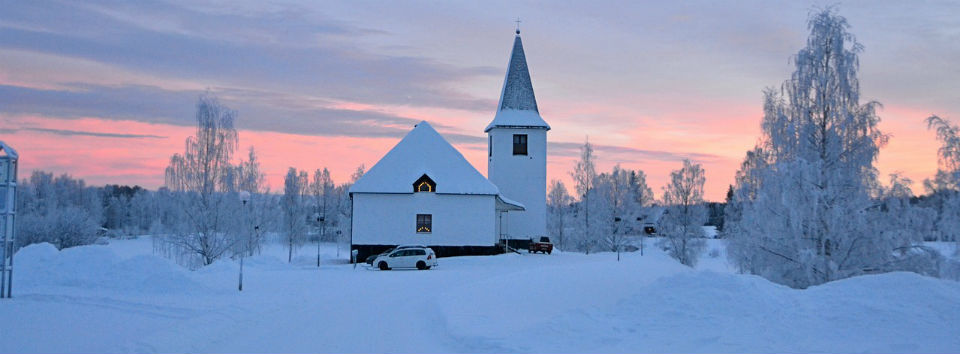
Sure, one of the stereotypes of Sweden is that nobody here is religious. Of course, like any stereotype – this is flawed – Sweden is a secular country but there are of course religious people here, and historically the church played an important role in people’s lives. However, in modern-day Sweden, the majority of Swedes call themselves atheists or agnostics.
Unlike many countries around the world, the church and the state are separated and the religious leaders have no influence over constitutional rights or lawmaking in the country.
So this time of the year, it can seem hypocritical when secular Swedes start to celebrate advent – a period of highly religious significance leading up to the birth of Christ. But I would say, for most Swedes, advent isn’t about the arrival of the Christian saviour – it is more about the custom of lighting up the dark, and being cosy.
Throughout the country, on the first Sunday of advent – four weeks before Christmas – Swedes put electrical candlesticks (known as ‘adventljusstake’) in their windows, hang fairy lights around their balcony rails and arrange lights on trees in the garden. They also light a candle every Sunday leading up to the big day.
Lighting up the environment is almost as important as the traditional eating and drinking. Since the Middle Ages, Swedes have loved their mulled wine (glögg) and in today’s Sweden it comes ready-mixed in a bottle. This is the time of year when they crack open the said bottle, heat the mulled wine in the microwave, add some almonds and raisins and drink it with a gingerbread biscuit. Glögg is usually sickly sweet and often very alcoholic – so a treacherous advent buzz is not usually too far away.
The popularity of the beverage is so large that the Swedish alcohol monopoly launches a new flavour of glögg every year. This is heavily anticipated by many Swedes and, once purchased, pictures of the bottle start appearing on social media feeds across the country. This year the flavour is inspired by India and infused with cardamom, ginger, cloves, cumin, and chili.
So, do not be deceived. For most people in Sweden, advent has no religious connotation, so it’s not hypocritical. Advent is less about the coming of Christ and more about the lead-up to the Christmas holiday and the small traditions that help us get through this darkest period of the year.